Granted Projects
Introduction
The research areas of the teachers of the Institute of Political Science NSYSU mainly include political theory, comparative politics, international relations, quantification, and straightening research methods. In addition to the main areas, the professors of the Institute of Political Science are also doing an individual interest in research fields. Conduct in-depth research on issues. The following are the ongoing research projects of various professors. Everyone is welcome to join us and enjoy the fun and surprise of learning and discovering knowledge together

Factors and Actors Contributing to the Willingness to Defend One’s Own Country: the Case of Latvia, Lithuania and Taiwan
The issue of willingness to defend one’s own country stretches far beyond the military sector. The level of (un)willingness is both a symptom of and factor in a range of societal-level and individual-level attitudes. The project aims to uncover, analysis and compare factors and actors contributing to willingness to defend one’s own country in Latvia, Lithuania and Taiwan, and thereby to extend the current universal toolkits and hypotheses in assessing the willingness. Based on a review of theoretical literature, the project will provide policy-oriented proposals for increasing the willingness level, and will contribute to the scientific literature in the field by extending the current toolkits and hypotheses in assessing the willingness. No less importantly, the project will advance the scientific cooperation and exchange between the Baltic states and Taiwan in social sciences. Given the surrounding geopolitical grievances in both regions, the project has a fair potential to raise the public recognition of the issue and also Baltic-Taiwanese cooperation.
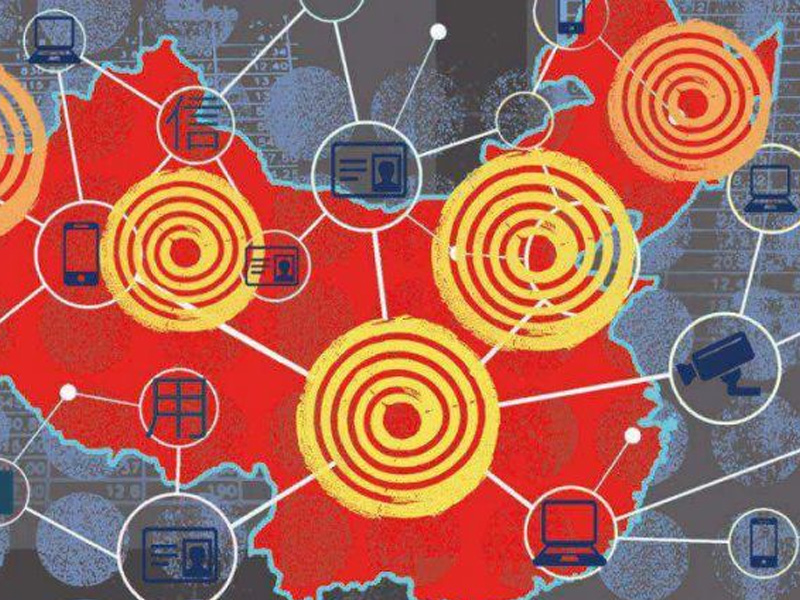
Making Legitimacy: Digital Propaganda in China in the Time of Xi Jinping
Principal Investigator / Titus C.Chen
This research project will combine data science (i.e. "big data") technology and qualitative dissertation analysis methods to explore the digital publicity model and its political effects displayed by the Chinese government on WeChat social platforms. In our earlier research, we found that the CCP media has developed six types of digital propaganda on the Internet: propaganda by indoctrination, propaganda by intimidation, propaganda by identification, and performance Propaganda by performance, propaganda by exposure, and propaganda by soft topics. We are expanding the scope of our analysis to see if these six digital propaganda methods have also appeared in other party and business patriotic media public accounts. This study will also examine whether Xi Jinping's ideological concepts and the reform of key propaganda agencies that he led during his first term of office have influenced the CCP's digital propaganda model.
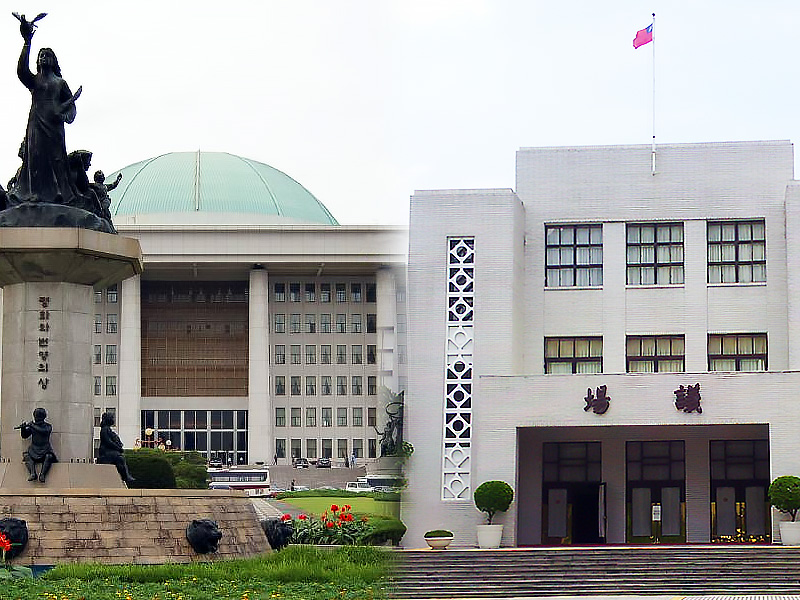
A Comparative Legislative Study of Issue Representatives in Taiwan and South Korea
Principal Investigator / Jinhyeok Jang
The main purpose of this research project is to investigate the similarities and differences between the issue representatives in Taiwan and South Korea. The so-called issue representative refers to the issues which are involved in the legislative act of the representatives and the depth and method of the representatives in discussing these issues. To answer this research question, this study integrates the theory of legislative organization and policy processes and conducts a comprehensive data analysis of the behavior of representatives of the Taiwanese Legislative Yuan and the Republic of Korea’s Congress.
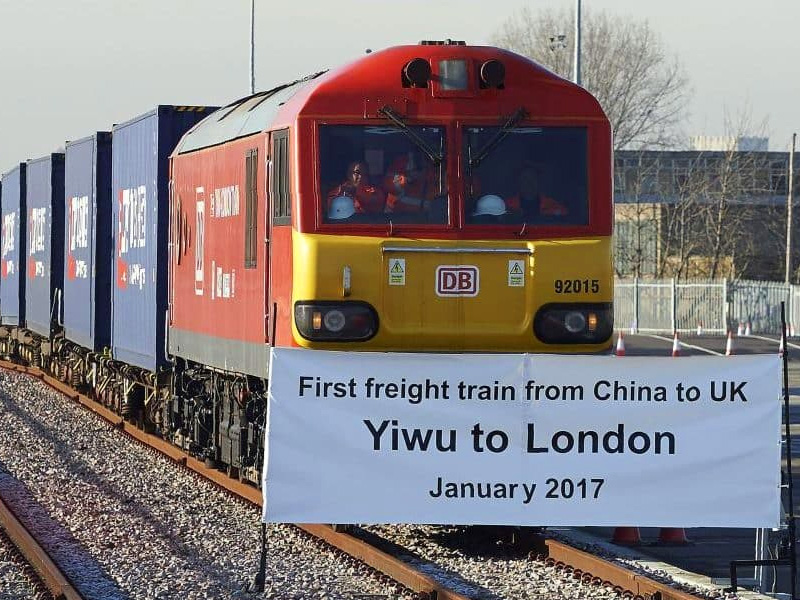
Political Economy of Belt and Road Initiative
Principal Investigator / Ian Tsung-yen Chen
This project investigates the factors contributing to and potential impacts resulting from the "Belt and Road Initiative" (BRI), especially factors pertaining to geopolitics, economic interests, and governance regime. This project will adopt comparative case studies technique, which focuses on diverse cases and crucial cases as qualitative research designs, and conduct fieldworks in India, Indonesia, and Pakistan using process-tracing technique.

National and Political Concepts: Max Weber's Impact on Carl Schmitt's Theoretical Construction
Principal Investigator / Shang-Ju Yang
This project aims to examine the writing of "political" by two thinkers Max Weber and Carl Schmitt, and further compare how the two thinkers understand the connection between "state" and "political", and How to develop its view of the country through this connection.
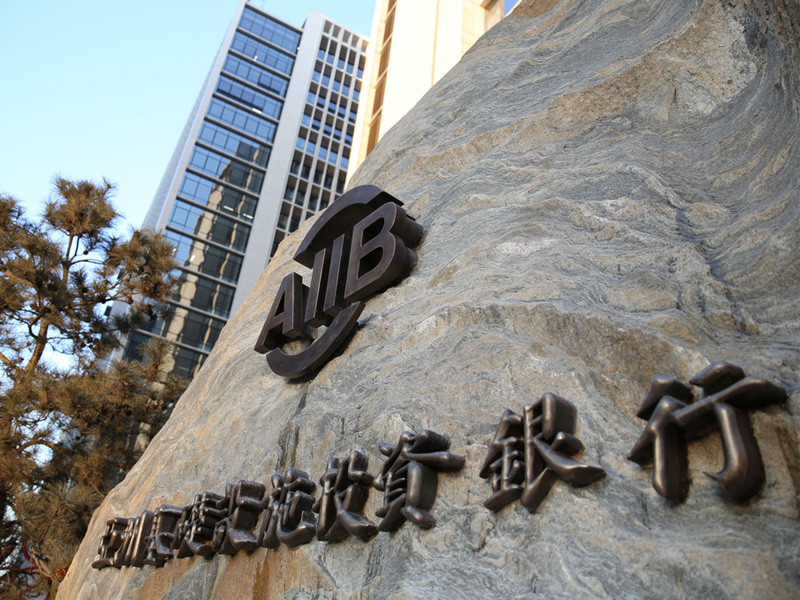
The Birth of the Asian Infrastructure Investment Bank
Principal Investigator / Ian Tsung-yen Chen
This project investigates how is the constitution of the Asian Infrastructure Investment Bank (AIIB) is influenced, as well as how the AIIB causes influences around the world. I hypothesizes that each country's acquirements of founding membership, voting power and loans depend on international and domestic political economic factors.
iVoter (Issue and Opinion Analysis Test)
Principal Investigator / Dachi Liao
iVoter: The Issue and Opinion Analysis Test. This project is conducting a survey activity by asking the public views on several major issues in China, and then by combining the personal responses from the legislators on the same issue. This intends to provide the public to understand the gap between the legislators and the voters on various policy positions in order to improve the efficiency of voting. This website expects to provide the public with more political information in a simple and user-friendly tool, and to encourage our people to take the initiative.

Thick Data Methodology
Principal Investigator / Cheng-Shan (Frank) Liu
Another research project is the Methodology of Thick Data. The goal of the project is to outline the epistemology, methodology, and research methods (such as data visualization and meaning discovery) which have not been fully recognized and applied by the political science community. Another Ministry of Science and Technology project is currently underway: "Listening to the Wind, Watching the Wind and Chasing Wind: Exploring Taiwanese People's Preference for Sensitive Political Issues and Their Significance through Thick Data Platforms and Visual Software Development". In this project, the data analysis method is applied to find the attitudes of Taiwanese people, especially middle-class voters, on various sensitive issues. The data analysis method is also projected to conduct a multi-level interpretation.

smilepoll.tw survey center
Principal Investigator / Cheng-Shan (Frank) Liu
In the past seven years, I have created the smilepoll.tw, an Internet public opinion survey center, which can be used by scholars and students in Taiwan and abroad for different levels of applications, including qualitative interviews (e.g. focus groups) and respondents’ selection and network tuning experiments (web-based survey experiment). Available topics include political attitude formation, political participation, political mobilization, polarization of opinion, and media use. The current implementation plan is the three-year "Cognitive Connotation and Measurement of National Legitimacy: A Perspective of Thick Data Methodology and Application of Network Tuning Methods" (2017-2020). The goal of the project is to explore and explore through online surveys. The project also does the experiments in looking for phenomena that are worth exploring and related to national identity and preferences for theory-building.
Cultural Relativism and Contemporary Chinese Political Discourse
Principal Investigator / Shang-Ju Yang
Behind the term "Chinese characteristics" is a set of political discourses. This is the core of which is to resort to Chinese cultural and value differences in order to prove that China has a policy direction and political system different than the West. This is to counter the universal values claimed by Western countries. In the future, researchers will continue to pay attention to how this cultural relativism continues to appear in contemporary Chinese political discourse.